Product
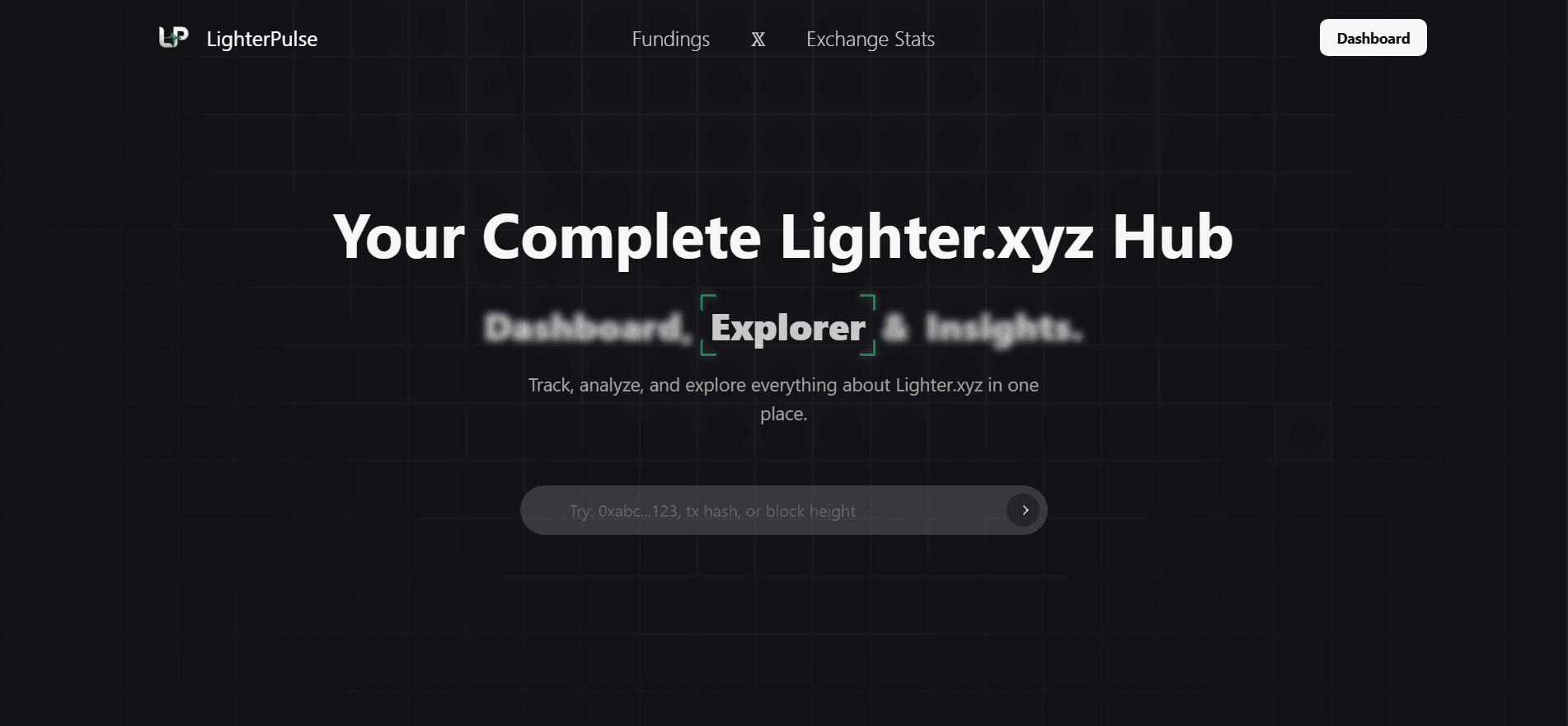
LighterPulse
Analytics hub for Lighter.xyz: dashboards, a block explorer, exchange stats and cross-venue funding comparison.
- Next.js
- TypeScript
- Tailwind CSS
Live
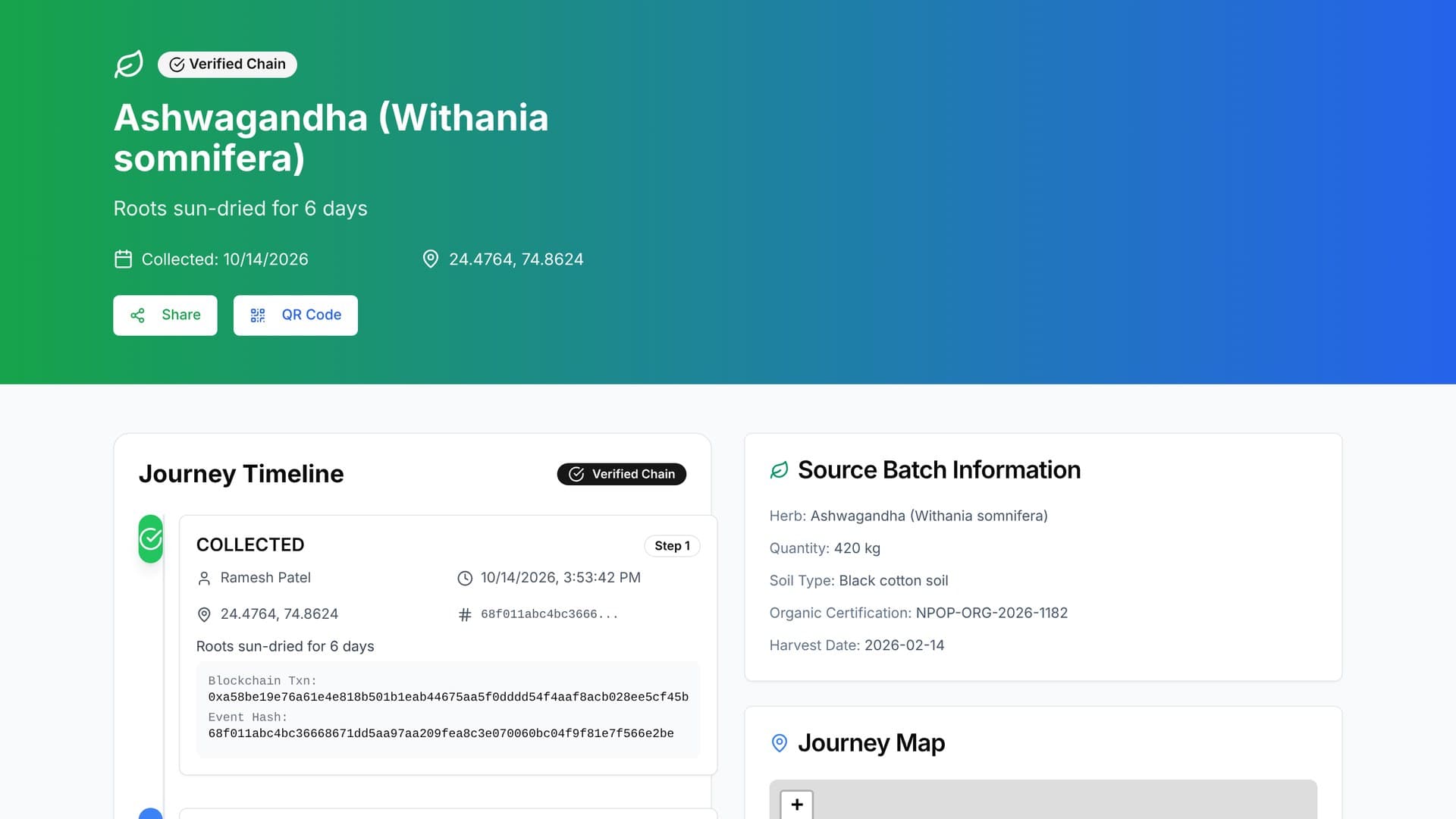
Traceability prototype for the Ayurvedic herb supply chain. Farmers register geotagged harvest batches, supply-chain actors append custody events, and every event is SHA-256 hash-linked to the one before it, so anyone who scans a batch's QR code sees its full journey on a timeline and a map, together with a check that the chain is unbroken.
Ayurvedic products depend on where and how their herbs were grown, but that history is usually lost somewhere between the farm and the shelf. Pramana (Sanskrit for "proof") records it as a chain of custody: a farmer registers a harvest with GPS coordinates, soil type and organic certification, and everyone who handles the batch afterwards adds an event with their own location, checkpoint and notes.
Each event stores the hash of the event before it, so the history behaves like a ledger: removing or reordering a step breaks the chain. A public batch page, opened from the batch's QR code, shows the journey as a timeline and a map and verifies the chain before marking it as trusted. The ledger is deliberately simulated, with SHA-256 hash links and generated transaction ids, to prove the workflow before committing to a real blockchain network.
Built on the Next.js 13 App Router with TypeScript, Tailwind CSS and shadcn/ui. Each role has its own dashboard, protected by middleware that requires a session cookie, while batch pages and the API stay public so a QR scan works for anyone. Passwords are hashed with bcrypt. Dashboards use the browser's Geolocation API with permission tracking and a manual-coordinates fallback, and the journey map loads react-leaflet on the client only, avoiding server-rendering issues.
Each event is assembled from its actor, type, location, timestamp and metadata, then hashed with SHA-256 together with the previous event's hash, so every record commits to the entire history before it. Batches also carry a root hash of the original harvest record. A verification endpoint walks the chain and returns whether it is continuous and, if not, the index where it breaks. Records are stored as JSON files and each event is logged as a simulated transaction with a generated id, which keeps the prototype self-contained.
A supply-chain record is only useful if changes to it can be detected. Hash-linking each event to its predecessor means a removed or reordered step breaks the chain, and the verification endpoint reports exactly where, so the public page can flag a broken history instead of quietly displaying it.
A transporter must not be able to record a harvest, and a farmer must not be able to mark a batch as processed. Permissions are checked in the API against the stored user's role rather than in the UI, so a forged request is rejected with a 403.
Location is the core of every event, but browsers expose GPS only on secure origins and only after the user grants permission. Dashboards track the permission state, explain what is needed and fall back to manually entered coordinates, so a denied prompt never blocks the workflow.
Consumers scanning a QR code should not need an account. Middleware protects only the role dashboards and leaves batch pages and the API open, so verification works for anyone with the link.
Ayurvedic brands, farmer cooperatives and regulators exploring farm-to-shelf provenance, and consumers who want proof of where a product's herbs came from.
Product
Analytics hub for Lighter.xyz: dashboards, a block explorer, exchange stats and cross-venue funding comparison.
Backend service
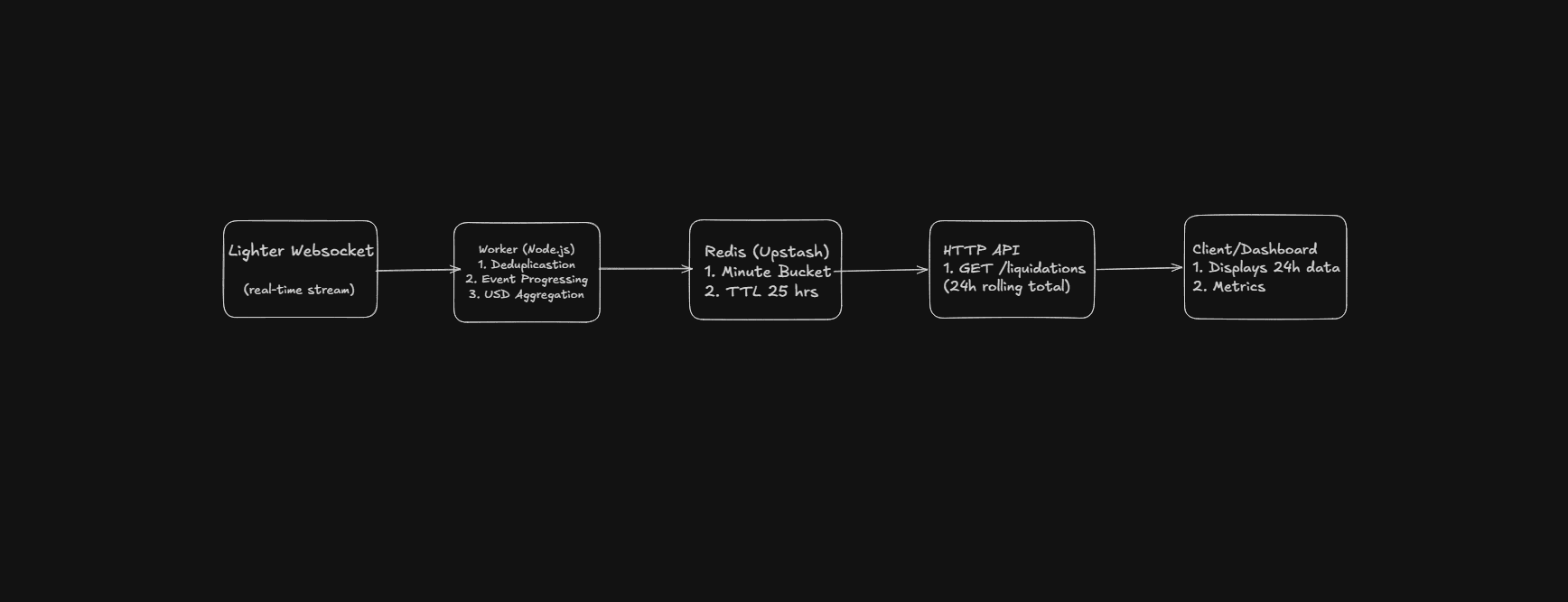
Streaming pipeline that ingests Lighter liquidations, dedupes replayed batches and serves a rolling 24h total.